MSI Nepal has shared the success of an interactive community theatre initiative that helped local communities speak more openly about sexually and gender-based violence (SGBV) and connect more survivors with support.
The initiative was made possible with the support from the Australian Government through the Australian NGO Cooperation Program (ANCP).
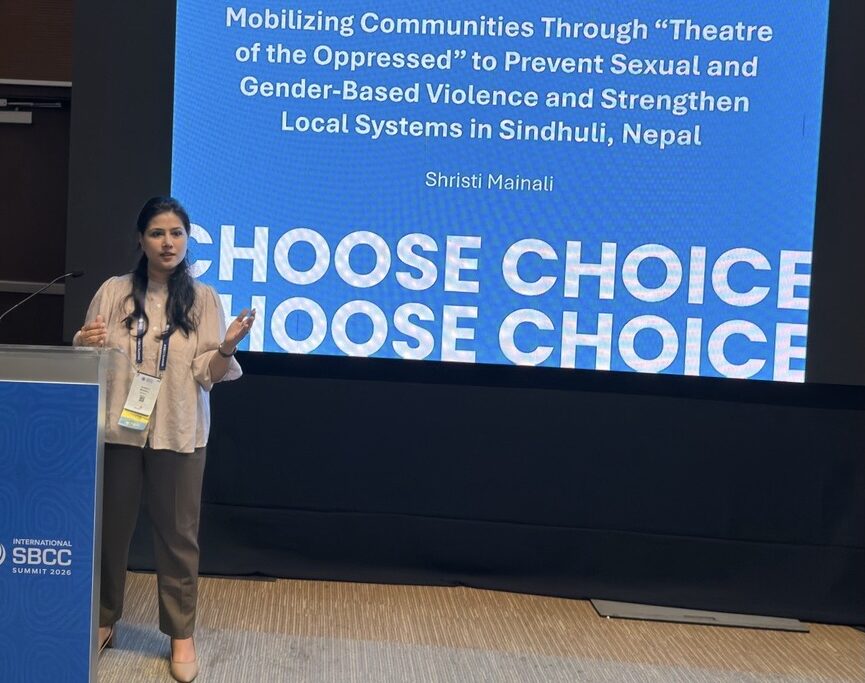
MSI Nepal’s Program and Partnership Manager, Shristi Mainali, recently presented the initiative at the 2026 International Social and Behavior Change Communication (SBCC) Summit in Panama City, Panama.
The Summit brought together more than 800 practitioners, researchers, policymakers, advocates, and community leaders from more than 125 countries. Organised by the Johns Hopkins Centre for Communication Programs (CCP), the Centre for Communication and Social Impact (CCSI) and a consortium of global partners, the Summit was held for the first time in Latin America and the Caribbean, at a moment when communication systems are being reshaped by changing levels of trust, fragmented information environments and new technologies.
Challenging harmful norms, strengthening referral pathways
This year’s theme, The Power of Connection: Reimagining Knowledge, Action and Equity in a Changing SBCC Landscape, focused on how communication can help communities respond to complex social challenges.
A central idea running through the Summit was that information alone is not enough to drive change. Trust, relationships, culture and lived experience shape how people understand information and whether they feel able to act on it.
For MSI Nepal, the Summit was an opportunity to share how locally led storytelling and interactive community theatre can help challenge harmful norms, strengthen referral pathways and support survivors of sexual and gender-based violence.
Breaking the silence around violence
In many communities, sexual and gender-based violence remains heavily underreported. Harmful social norms, stigma, taboos, fear, limited awareness, and weak referral pathways can prevent survivors from seeking support. This also means that essential services, including Nepal’s One-Stop Crisis Management Centres (OCMCs), can remain underused, underfunded or under prioritised – even when survivors need them.
To help address this gap, MSI Nepal piloted an innovative youth-led street theatre initiative in five municipalities of Sindhuli district.
The project, Mobilizing Communities Through Theatre of the Oppressed to Prevent Sexual and Gender Based Violence and Strengthen Local Systems in Sindhuli, Nepal, was supported by the Australian Government through the Australian NGO Cooperation Program (ANCP).
Turning audiences into participants
Rather than delivering information through a traditional awareness session, MSI Nepal used an interactive theatre model known as “Theatre of the Oppressed” – a form of community theatre where audiences do not simply watch a performance, but are invited to reflect, respond and discuss what action could be taken.

The performances in five municipalities in Nepal’s Sindhu district were based on real-life scenarios and designed to open discussion about violence, stigma, support-seeking and community responsibility.
At key moments in the drama, the performance would pause. Actors then invited audience members – including students, parents and community members – to reflect on what they had seen and discuss what they might do in the survivor’s situation.
This creative approach transformed passive onlookers into active participants, challenging harmful social taboos while focusing on the available, safe referral pathways. Instead of being told what to think, community members were invited to question harmful norms and social taboos, consider the barriers survivors face, and learn about safe referral pathways available in their communities.
From awareness to action
The results shared by MSI Nepal show how communication-led communication can help shift awareness into action.
The data Shristi shared at the summit showed that empowering communities to tell their own stories translates directly into lifesaving action and structural systems change. She told the audience that within three months of implementation, the pilot reached more than 1,500 people across five municipalities.
MSI Nepal reported a 58% increase in awareness of survivor services among community members reached through the initiative.
The pilot also contributed to a sixfold increase in referrals to support networks such as One-Stop Crisis Management Centre sites, with survivors, including adolescents, among those seeking support for sexual and gender-based violence in their communities. In many parts of Nepal, deeply rooted social norms and a lack of awareness have historically left SGBV heavily underreported, leaving management and support underfunded and under-prioritized.
Importantly, referrals also began to come from a broader range of people, including teachers and municipal leaders. This suggests the initiative did more than increase individual awareness – it helped strengthen the local support system around survivors.
Strengthening local ownership
One of the most important outcomes was the response from local government.
Following the success of the pilot, two municipalities allocated dedicated local public budgets for sexual and gender-based violence activities for the first time.
This is a significant step towards sustainability. It shows that when communities are engaged in meaningful ways, local systems can begin to take greater ownership of preventing violence and supporting survivors.
It also demonstrates the value of investing in approaches that are locally led, practical and grounded in the realities of community life.
The Summit reflected a broader shift in social and behaviour change communication: moving beyond message delivery towards approaches built on trust, collaboration, culture and shared meaning. MSI Nepal’s theatre-based initiative is a practical example of this shift in action.
Sharing local learning on a global stage
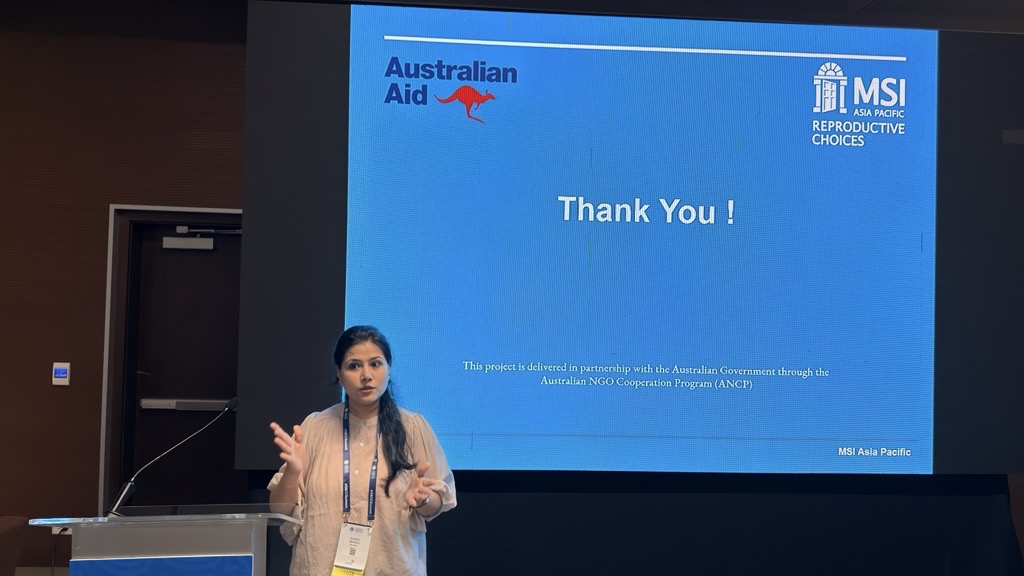
Shristi’s presentation placed MSI Nepal’s work alongside global examples of social and behaviour change communication, highlighting the role of community voice, local leadership and participatory approaches in creating change.
Her paper was selected for an oral presentation from a highly competitive global field with more than 1,900 abstracts submitted from all over the world, out of which only around 600 were accepted.
MSI was also represented at the Summit by Joanna Skinner, Head of Social and Behaviour Change and Inclusion at MSI Reproductive Choices, and Ester Shedafa, Advocacy and Communication Manager at MSI Tanzania, who also shared their work, amplifying MSI’s collective voice.
Together, they amplified MSI’s collective voice and with their presentations helped amplify the organisation’s collective experience in using communication, evidence and community engagement to advance sexual and reproductive health, rights and gender equality.
Support that matters
The pilot was made possible through the support of the Australian Government through the Australian NGO Cooperation Program.
This support enabled MSI Nepal to test a creative, community-based and cost-effective model for addressing sexual and gender-based violence. The approach helped bring together young people, families, teachers, municipal leaders and service providers around a shared goal: making it safer for survivors to speak up and seek support.
For MSI Nepal, the experience shows that communication is not only about delivering messages. It is about creating spaces where people can listen, reflect, question harmful norms and take action.
For MSI Nepal, the message was clear: when communities are given the opportunity to tell their own stories, challenge silence and connect people with support, communication can become a pathway to safety, dignity and change.
MSI Asia Pacific acknowledges the support of the Australian Government through the Australian NGO Cooperation Program (ANCP) in supporting this work. This partnership continues to empower communities to transform hope into healing, proving that change happens when local voices are given the confidence to speak up through story telling of their own real-life scenarios.