
“What drives me in my work is that every young girl, every adolescent, every woman who needs help – they are my daughter,” says Nancy Hombo, Gender Equality, Disability and Social Inclusion (GEDSI) Manager with MSI in Papua New Guinea, and explains: “My daughter is 13, and that shapes how I support and care for the women and girls we work with every day.”
Across some of the most remote and hardest to reach communities in Papua New Guinea, Nancy focuses on connecting women, girls and couples with sexual and reproductive health information and services – often in contexts where access is limited not only by distance, but by geography, cost, language, safety, and deeply rooted social norms that can make it difficult for women to seek reproductive health care independently.
Nancy’s childhood revolved around hospitals
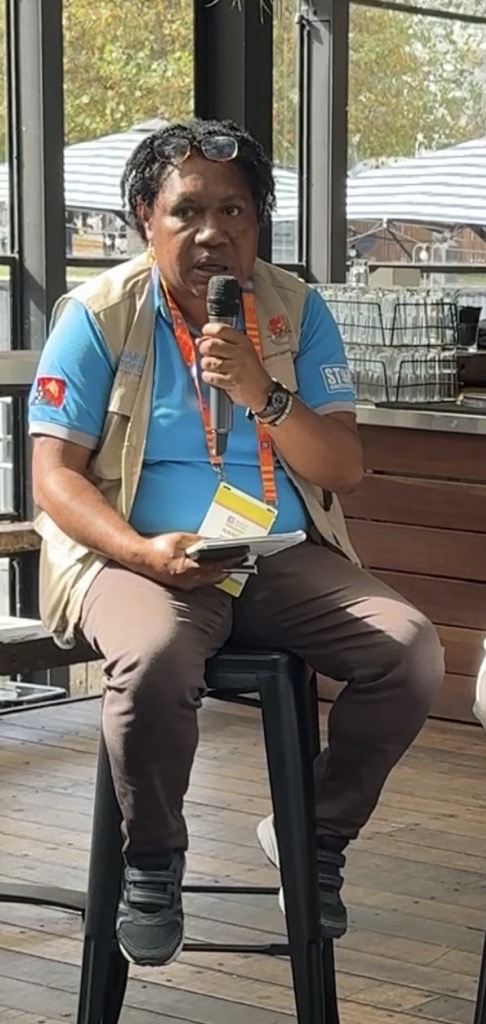
Nancy grew up in Goroka, in Papua New Guinea’s Eastern Highlands Province, where her childhood revolved around a hospital. Her mother was a nurse.
“I used to take my little brother to my mum’s workplace when he needed breastfeeding,” she recalls. “I would watch the nurses going around with their treatment charts, putting in IV drips, checking vital signs, caring for patients.”
She was drawn to the way they worked – their focus, their care, their responsibility. “That’s where my interest in health started,” she says. “I told myself, when I grow up, I will be a doctor or a nurse.” And she did, earning a place at the University of Papua New Guinea in Port Morsby to study medicine. However her path changed when her mother had a stroke. “As the only daughter, I had to go home to take care of her,” she says. “I couldn’t leave.”
Instead, Nancy trained as a nurse close by with a scholarship from the Australian Government – a decision shaped by responsibility, but one that ultimately defined her career. She built her skills in family health, STI care and family planning, eventually becoming a provider trained by MSI, working directly with mothers in communities and supporting outreach services, before working full time for MSI.
“I thought contraception was only for married women.”
What Nancy sees in her work today – the barriers women face in accessing contraception and care – is not unfamiliar to her. Even as a nursing student, she experienced them personally. “I didn’t know I could go and get contraception,” she says. “I thought it was only for married women.”
The barrier was not only a lack of information – it was fear of judgement. “I was convinced that if I went to the clinic, people would see me and judge me,” she explains. “They would think I was doing something wrong.” The consequences were profound. Nancy became pregnant – and later lost the baby.
“That’s when I realised how important family planning is,” she says. “It made me understand that education is needed everywhere – even in nursing schools, even in medical training. Young people need to know what is available to them and where they can go.”
Today, those barriers continue to shape the lives of women and girls across Papua New Guinea. “One of the biggest challenges women face is financial,” Nancy says. In the Highlands, income often depends on seasonal crops such as coffee. “People only have money once a year,” she explains. “When they have that money, they come into town – but they don’t know where to go or what services are available.” For many women, that journey represents a rare opportunity – one that may not come again for months. “If they miss that chance, they may not come back for a long time,” she says.
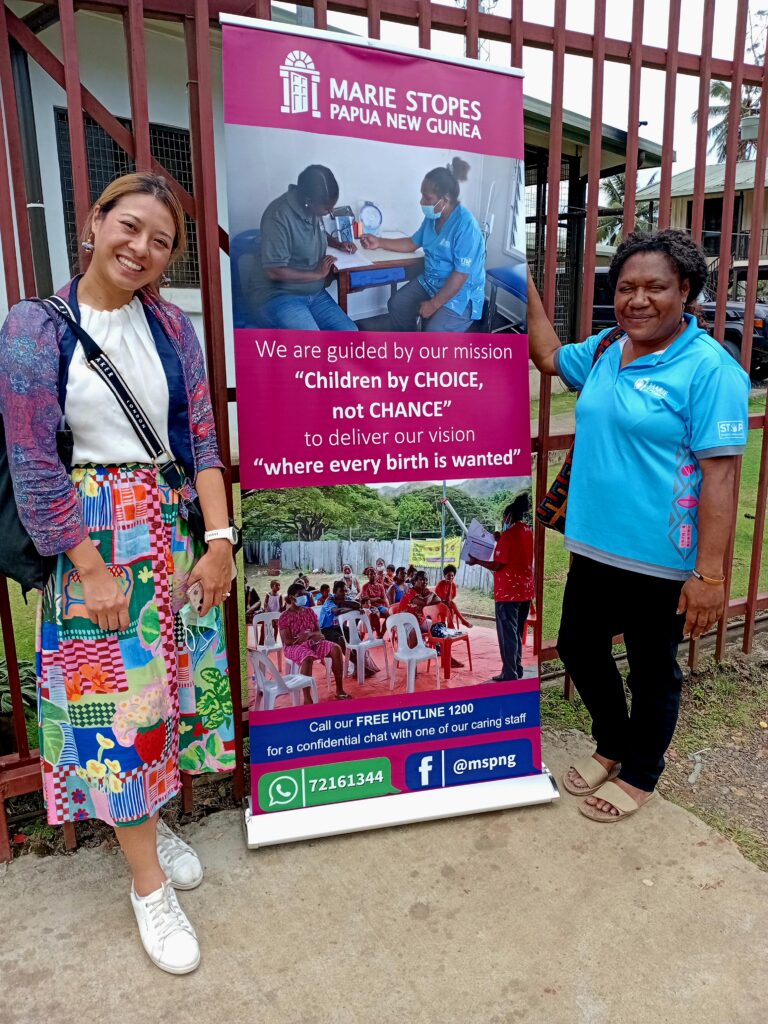
The challenges in a country where 850+ languages are spoken
Distance is only part of the challenge. Papua New Guinea’s geography – with its remote highlands, scattered islands and limited transport infrastructure – makes access to services particularly difficult.
Papua New Guinea is also one of the most linguistically diverse countries in the world, with more than 850 languages spoken. “Many people in rural communities speak only their own language,” Nancy explains. “Even if they understand Tok Pisin or English, they may not be able to read. So even when information exists, it doesn’t always reach them in a way they can use.”
Safety is another barrier. “To reach a health facility, women often have to walk long distances,” Nancy says. “It is not always safe – especially for women and girls travelling alone.” In many communities, decisions about health are not always made by women alone, and social expectations can make it difficult for them to seek care independently. These challenges – financial, geographic, linguistic and social – often overlap, making access to care even more difficult.
Working hard to connect and making access to care easier
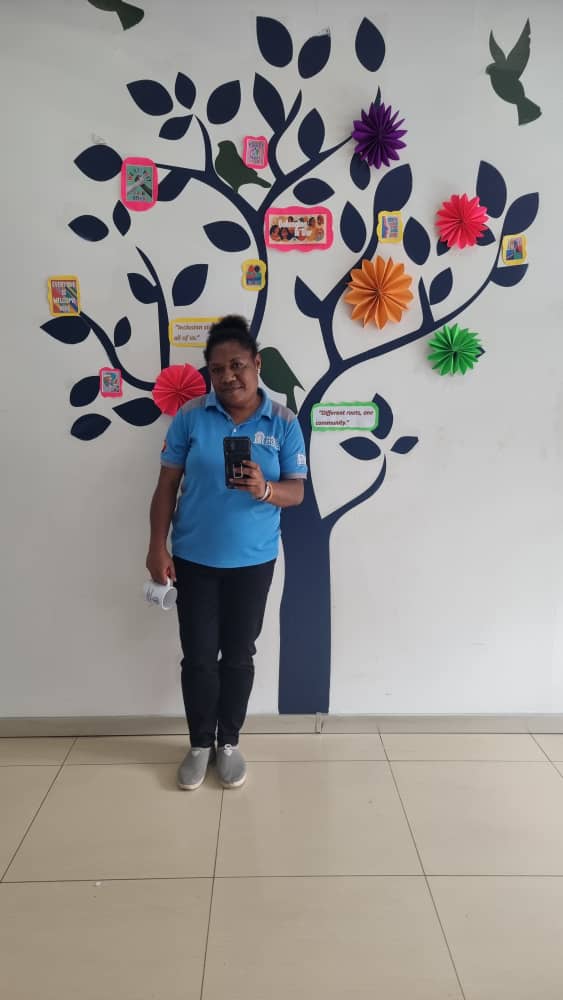
Through her work with MSI, Nancy is helping to close these gaps – not only by supporting communities, but also by connecting health facilities, government services and local organisations with MSI’s outreach and referral services. She works directly with communities, raising awareness about sexual and reproductive health and supporting people to access services. She also works with healthcare providers, strengthening systems and improving coordination.
In one provincial hospital, Nancy identified that even staff were not fully aware of referral pathways. “Some had seen MSI teams but didn’t know what they were doing,” she says. Through training and referral mapping, she helped improve coordination – making it easier for patients to access the care they need.
But the need remains urgent. In one hospital alone, Nancy reviewed data showing 180 teenage pregnancies in a single year. In just the first quarter of the following year, there were already 80. “These are girls between 13 and 19,” she says. “We need more awareness in communities and in schools,” she adds. “Sexual and reproductive health is not only the responsibility of healthcare workers – it is everyone’s responsibility.”
Without that awareness, the consequences are far-reaching.
“If MSI was not here women would lose hope”
“Teenage pregnancy, STIs, HIV, girls dropping out of school,” she says. “Children having children who cannot provide for their own families.” Nancy has seen what happens when women are able to access care – and what happens when they cannot. “If MSI was not here in Papua New Guinea,” she says, “women would lose hope.”
For Nancy, that is what makes this work urgent – and why she continues to show up, every day, for the women and girls who need it most.