
Across the Asia-Pacific region, access to healthcare is shaped by more than whether a service exists.
For many people, distance, cost, limited infrastructure, stigma, disability, climate disruption or lack of trusted information can affect whether they are able to access sexual and reproductive healthcare when they need it.
A recent independent review looked at MSI Asia Pacific’s work supported by the Australian Government through the Australian NGO Cooperation Program (ANCP), and how this support can be used in the years ahead to strengthen access, learning and locally relevant healthcare.
One of the clearest findings was the value of flexible funding.
In complex and changing environments, ANCP’s flexible funding support helps MSI Asia Pacific and country programs respond in complex and changing environments to local needs, adapt when circumstances change, test new approaches and bring sexual and reproductive healthcare closer to the people who need it.
What this looks like across countries
MSI Asia Pacific’s current ANCP-supported work spans Cambodia, Nepal, Pakistan and Papua New Guinea. Each country program responds to different barriers, but all share a focus on improving access to sexual and reproductive health information and services.
In Cambodia, ANCP’s support contributes to telemedicine and sexual and reproductive health services, helping create more flexible pathways for people to seek trusted information and quality care.
In Nepal, ANCP-supported activities help address barriers faced by remote, under-resourced and marginalised communities, including through outreach, referrals and public-sector service delivery.
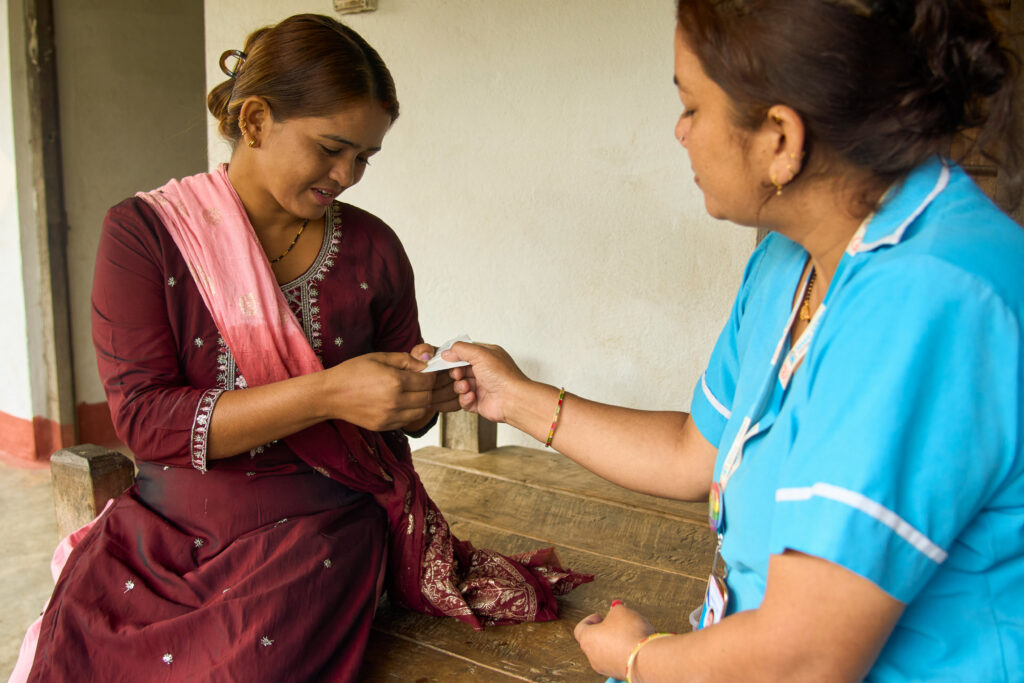
In Pakistan, ANCP funding is helping connect sexual and reproductive health with climate resilience in communities affected by climate-related flooding. Activities include community education on climate change, sexual and reproductive health and family planning, as well as access to menstrual hygiene kits and reproductive health services.
In Papua New Guinea, ANCP support is helping strengthen sexual and reproductive health services in MSI centres and outreach in Port Moresby and Lae, including through clinic upgrades, improved technology and partnerships that support access for people who are vulnerable or marginalised.
The work looks different in each country because the barriers are different in each country. That is exactly why flexibility matters.
Funding that can adapt when needs change
The review found that ANCP’s flexibility can support innovation, learning and adaptation. This is important because reproductive healthcare is delivered in real-world conditions: communities may be remote, health systems may be stretched, climate events may disrupt access, and social barriers may prevent people from seeking care.
Rigid plans do not always work in complex and fast-changing environments.
Flexible funding makes it possible to test and refine approaches – to adjust, respond and improve as programs are delivered – rather than assuming that one model will work everywhere.
It helps MSI’s programs and country teams respond when circumstances change. The review found that MSI Asia Pacific’s ANCP-supported projects are generally delivering against annual targets, despite operating in challenging environments.
Testing, learning and improving over time
In practice, this means giving country programs room to test locally relevant approaches, learn from experience, adapt when circumstances change and improve services over time.
That matters because there is no single model for expanding access to sexual and reproductive healthcare across the region. What works in one country, community or health system may need to be adapted in another.
This kind of learning does not happen by accident. It is made possible by support that allows room to experiment, adjust and improve over time.
Flexible funding, like ANCP support, helps make this kind of learning possible. While each project responds to different local needs, the portfolio creates opportunities to bring evidence and experience together across countries, share what is working, and strengthen how programs respond to barriers over time.
It also shows that ANCP support is not only a funding stream. It is also a platform for partnership, learning, public diplomacy and demonstrating the value of Australian-supported development.
Turning learning into stronger healthcare access

For MSI Asia Pacific, the next opportunity is to build on the review’s findings by strengthening how flexible funding such as ANCP-supported work is planned, shared and learned from across countries. That means continuing to support locally relevant projects.
As development challenges continue to evolve, there is increasing recognition of the need for approaches that are flexible, locally informed, and responsive to change.
The findings of this review suggest that funding models such as ANCP can play an important role in supporting this approach – particularly when combined with strong coordination, clear strategy, and ongoing learning.
Designing healthcare around people’s lives
Ultimately, improving access to healthcare requires more than delivering services. It involves working in partnership with communities, adapting to complex environments and building systems that can respond to changing needs over time.
At the heart of this work is a simple principle: access to healthcare improves when services are designed around people’s lives.
MSI Asia Pacific acknowledges the support of the Australian Government through the Australian NGO Cooperation Program (ANCP) in helping expand access to sexual and reproductive health information and services across the region. https://www.dfat.gov.au/development/topics/development-sectors